Description

Thermal and mechanical analysis Output power and beam quality Rate equation systems Laser stability and beam radius Laser amplifiers Chirped pulse amplification Pump light analysis Active and passive Q-switch Laser materials and applications Request a demo

ASLD Simulation Modules

This page explains how key solid-state laser simulation tasks are modeled in ASLD, including thermal lensing, resonator output power and beam quality, rate-equation systems, laser stability, amplifier simulation, pump-light analysis, and active and passive Q-switch simulation.

How is thermal lensing modeled in a laser crystal?

Thermal lensing in a laser crystal is modeled by combining thermal and structural analysis with pump-light absorption and time-dependent temperature behavior. ASLD uses a 3-dimensional Finite-Element Method (FEM) for this analysis.

thermal lens in crystal

The simulation covers thermal lens effects, time-dynamic temperature analysis, deformation, stress, birefringence, and depolarization. The FEM solver also accounts for frequency-dependent pump-light absorption and supports pulsed pump-light analysis. See demo video.

How are output power and beam quality modeled in a laser resonator?

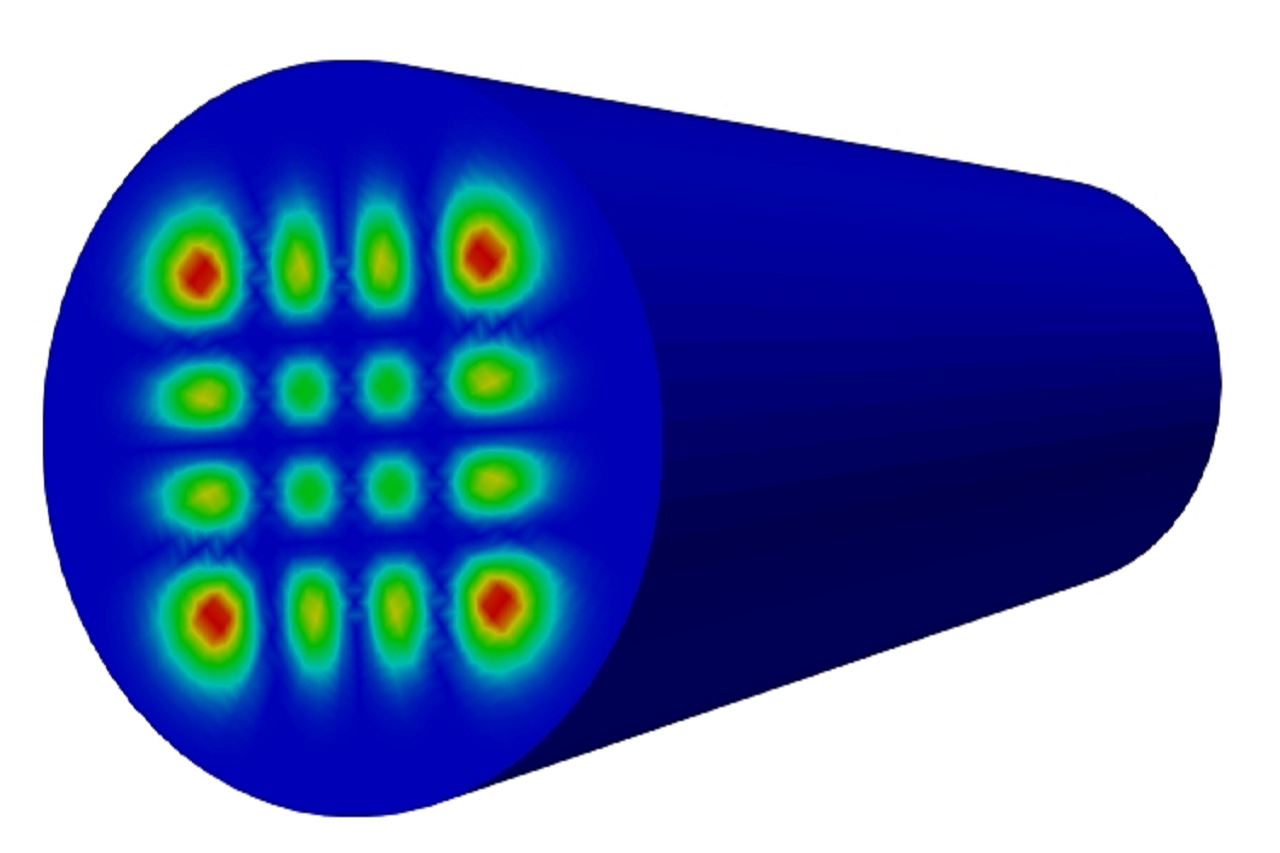
ASLD calculates output power and beam quality (M²) using Dynamic Multi-Mode Analysis (DMA). The method simulates the time-dynamic behavior of high-order and low-order Gaussian modes through a finite-volume discretization of the population inversion, enabling mode competition to be analyzed as a function of beam radius, pump configuration, resonator design, and optical elements such as apertures and Gaussian output couplers. See demo video.

output beam

How are rate-equation systems modeled in solid-state lasers?

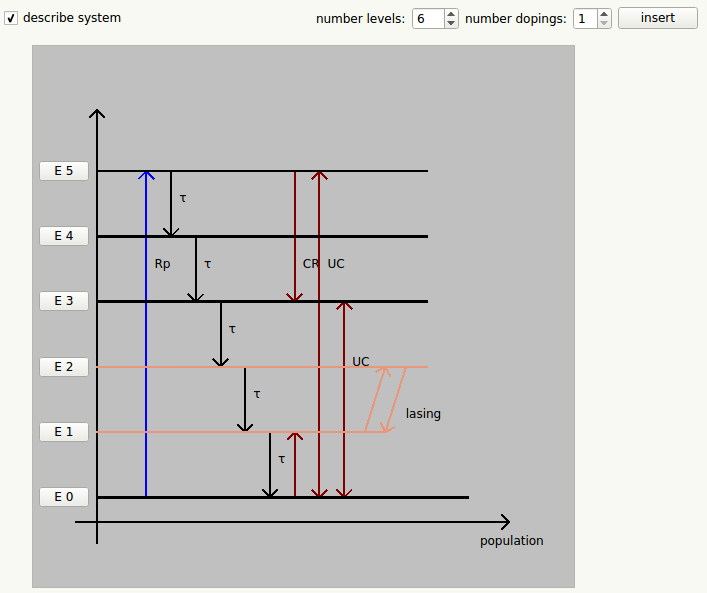
ASLD models resonator dynamics using arbitrary rate-equation systems, covering co-doped materials and interionic mechanisms such as up-conversion, energy transfer, and cross-relaxation.

rate equation

Rate equations are stored in a material database and can be extended by the user. ASLD also supports multi-level systems, temperature-dependent stimulated emission cross-sections, and reabsorption effects.

How are laser stability and beam radius calculated in a resonator?

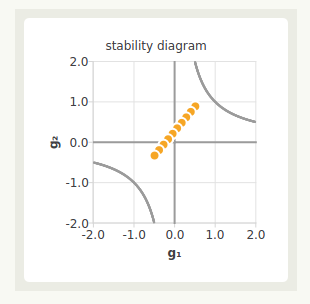
ASLD calculates laser stability and beam radius from resonator configuration and thermal lensing effects, covering both stable and unstable resonator designs.

laser stability

The software also supports polarization-dependent stability analysis and parameter studies for resonator optimization. Parameters such as pump-light power, pump frequency shift, and output mirror reflectivity can be varied to evaluate their effect on output power, beam quality, and stability.

How are solid-state laser amplifiers modeled?

laser amplifier

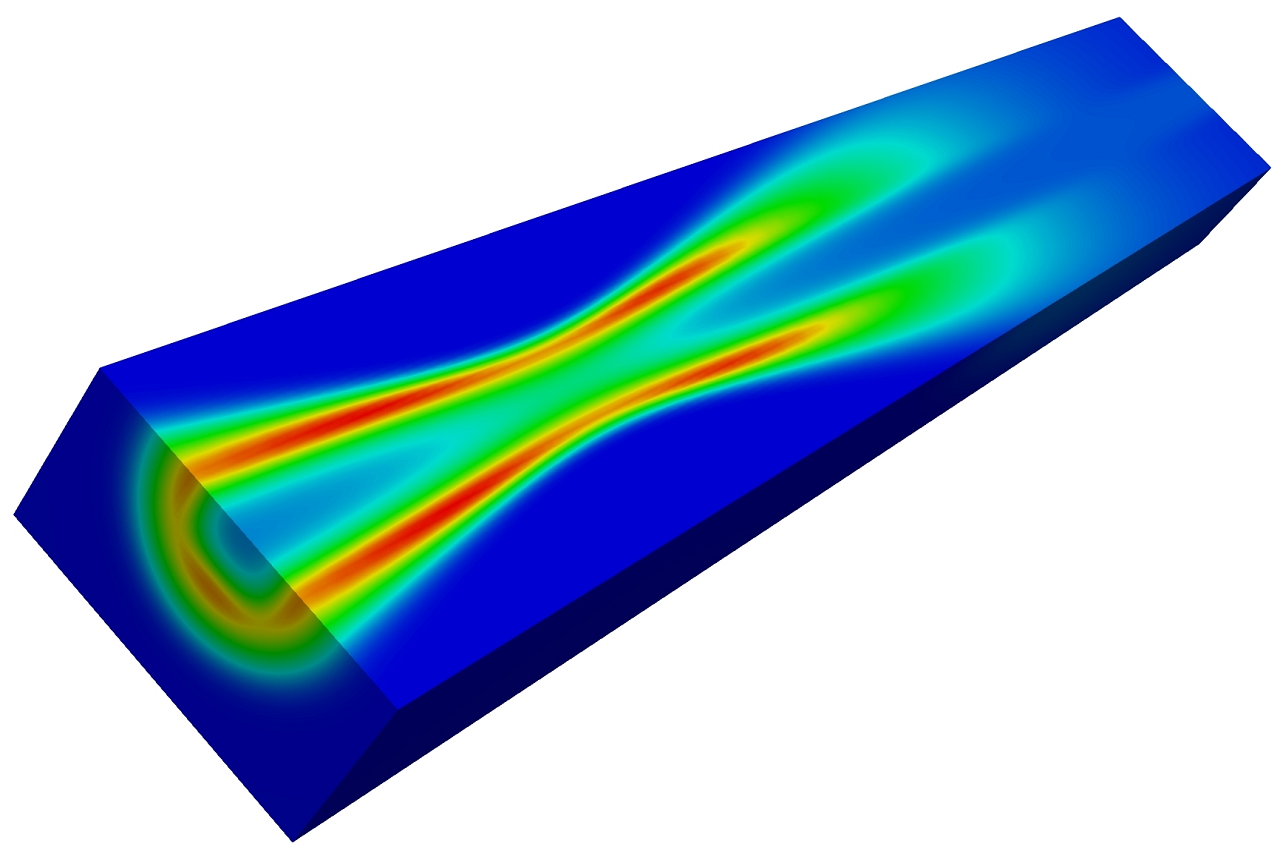
ASLD simulates solid-state laser amplifiers for cw signals, short pulses, ultra-short pulses, and chirped pulse amplification, calculating gain, output power, beam quality, pulse energy, and far-field behavior. The population inversion is modeled on a 3-dimensional finite-volume grid to accurately capture the influence of pump configuration on amplifier performance. See demo video.

How is ultra-short or chirped pulse amplification simulated?

ASLD supports the simulation of ultra-short and chirped-pulse amplifiers, with dedicated modeling of gain guiding, Kerr lensing, and pump-light separation.

Amplifier beam-shape simulation uses Beam Propagation Method (BPM) approaches. Pump light is defined through ray tracing, supporting flexible end-pumped and side-pumped geometries. See demo video.

How is pump light modeled in a solid-state laser?

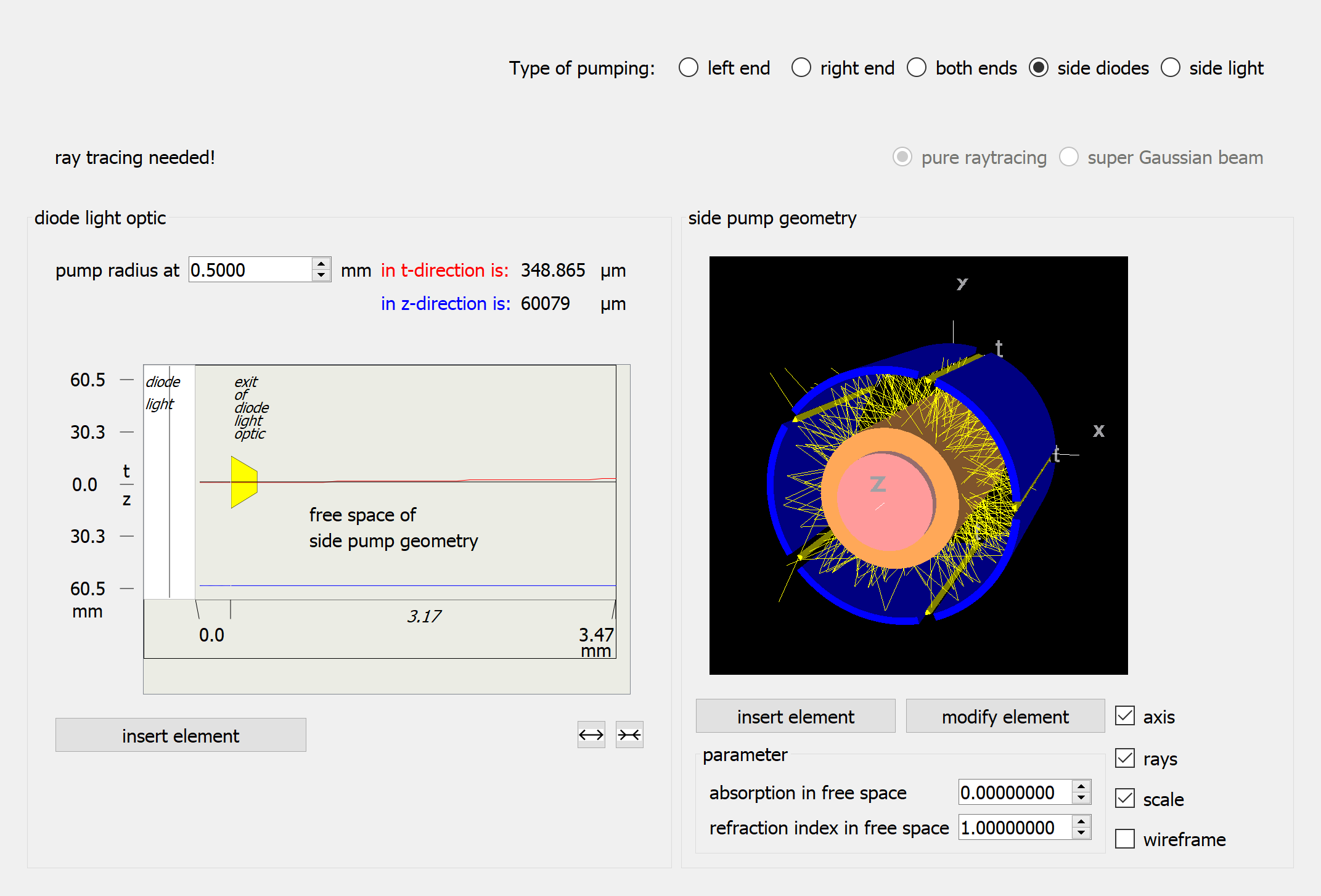
pump light ray tracing GUI

Pump light in a solid-state laser is modeled by accounting for pump spectrum, polarization, absorption, and pumping geometry in the laser crystal. ASLD supports both diode and flash-lamp pumping, with frequency-dependent absorption in the crystal material.

End-pumped and side-pumped geometries can be designed, and pump light can be defined using super-Gaussian functions or ray tracing. The ray-tracing model includes absorption, scattering, and reflection effects. See demo video.

How are active and passive Q-switch lasers simulated?

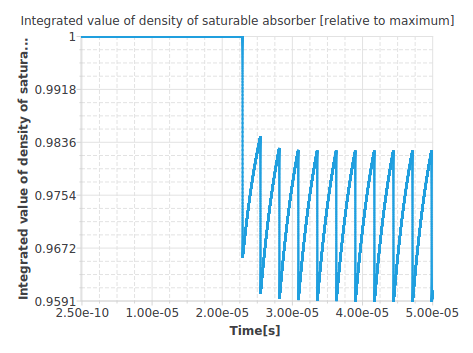
ASLD simulates active and passive Q-switch lasers, calculating pulse energy, pulse width, pulse frequency, and beam quality as a function of resonator configuration and saturable absorber properties.

active passive Q-switch

For passive Q-switching, the software includes a dedicated algorithm for saturable absorbers and accounts for physical properties such as ground-state and excited-state absorption cross-sections.

Mode competition in the resonator can also be simulated by dynamic mode analysis of both low-order and high-order Gaussian modes. See demo video.

Which laser materials can be modeled, and which applications are supported?

ASLD supports solid-state laser materials including Nd:YAG, Yb:YAG, Er:YAG, Er:glass, and Tm,Ho:YAG. Material data such as absorption spectra and wavelength-dependent and temperature-dependent stimulated emission cross-sections are included for these crystals.

Users can modify existing material entries and add new crystal types with their relevant specifications. ASLD supports laser development in academic and R&D work, aerospace, automotive, medical devices, and material processing. See demo video.

Learn more or request a demo

For an overview of ASLD methods and research background, visit the About page. For concise technical answers, visit the FAQ. To request a demo or more information, please contact us.